Wes Anderson, Ranked
Approaching previously unseen levels of Film Bro

The rise of Wes Anderson from obscurity to a nearly omnipotent presence over the film world to casual viewers and cinephiles alike is remarkable. Watching his movies chronologically reveals a filmmaker with the clearest of visions, the most carefully curated of aesthetics, and the steadiest hand controlling his craft. These truths are evident in each and every one of his films, becoming more and more unimpeachable with every passing entry. You’ll see a shot arranged, filmed, and directed in one movie that will make your jaw drop. Years later, you’ll see something remarkably similar, unmistakably Anderson, but somehow done even better.
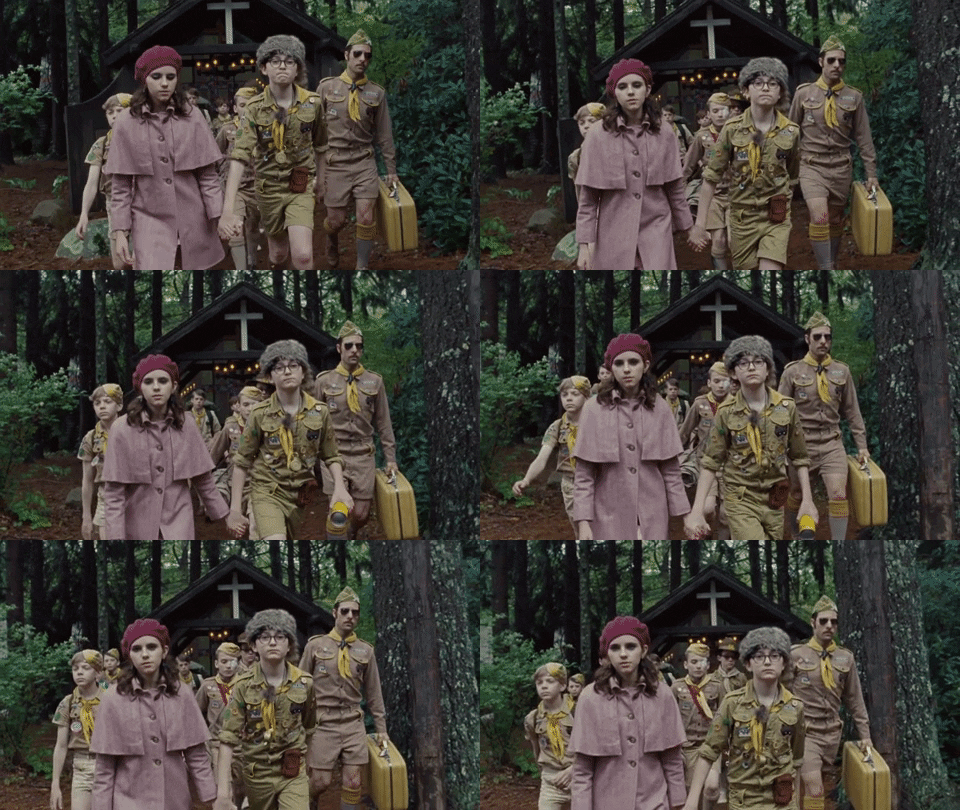
I’m no satisfyingly smug contrarian. My love of Wes Anderson is as strong as any other film student or cinephile out there. His entire catalogue ranges from “very good” to “masterpiece” amidst my overall rankings. A few of his movies can be credited with shaping the core principles I live by as a movie lover. And as his catalogue grew one entry larger last year with the release of The Phoenician Scheme, I find it fitting to give the director a sort of tribute in the form of my personal rankings of every feature film he’s released*.
*I must regrettable omit a handful of older entries; The Life Aquatic with Steve Zissou, Rushmore, and the feature-length version of Bottle Rocket. I intend to fill these gaps swiftly and report back with updated rankings.
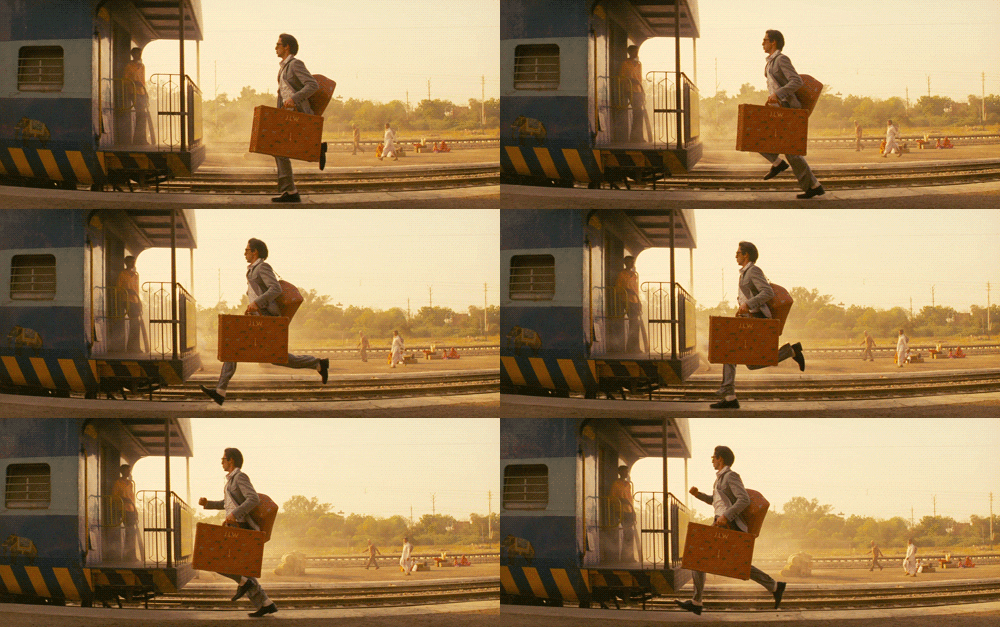
9. The Darjeeling Limited
Darjeeling ultimately feels like a transitionary work for Wes. He’s getting used to holding the reins of a bigger budget and crafting more audacious setpieces. Of all the Anderson films I’ve watched, the performances from Owen Wilson, Adrien Brody, and Jason Schwartzman feel the most like a push and pull between the director’s vision and the actors doing their own thing. I walked away feeling as if the themes, visuals, and character development landed all over the map, with the India setting coming off as surface level and under-explored. In spite of all of this, this movie still looks and feels leagues better than a lot of other movies you could pick.
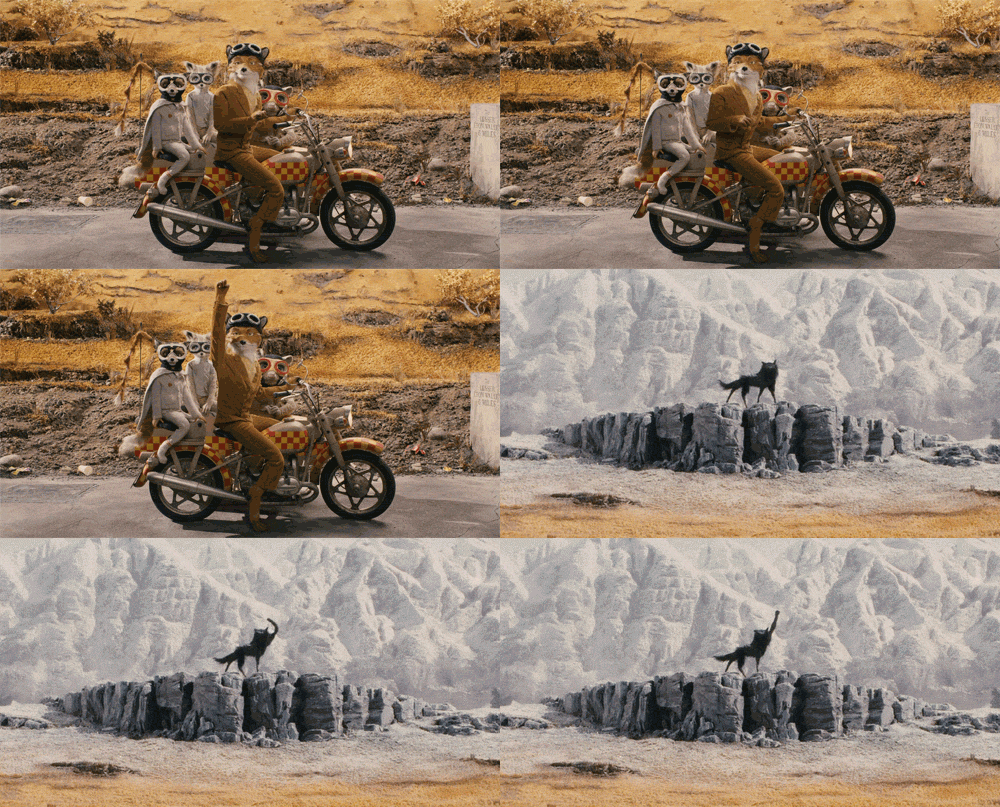
8. The Fantastic Mr. Fox
Such a movie as Mr. Fox being this low in the rankings goes to show how deep and consistent the Wes Anderson roster is. It’s his first plunge into stop motion, and because of it some of the visual/storytelling ideas are a little unrefined. Anderson’s finding his footing while simultaneously expanding a children’s story into a feature chock full of his trademark quirks and comedy. It works, most of the time. Just a little too bloated with ideas and tonally scattershot at times, especially when held up against where he’d go with stop motion later on down this list.
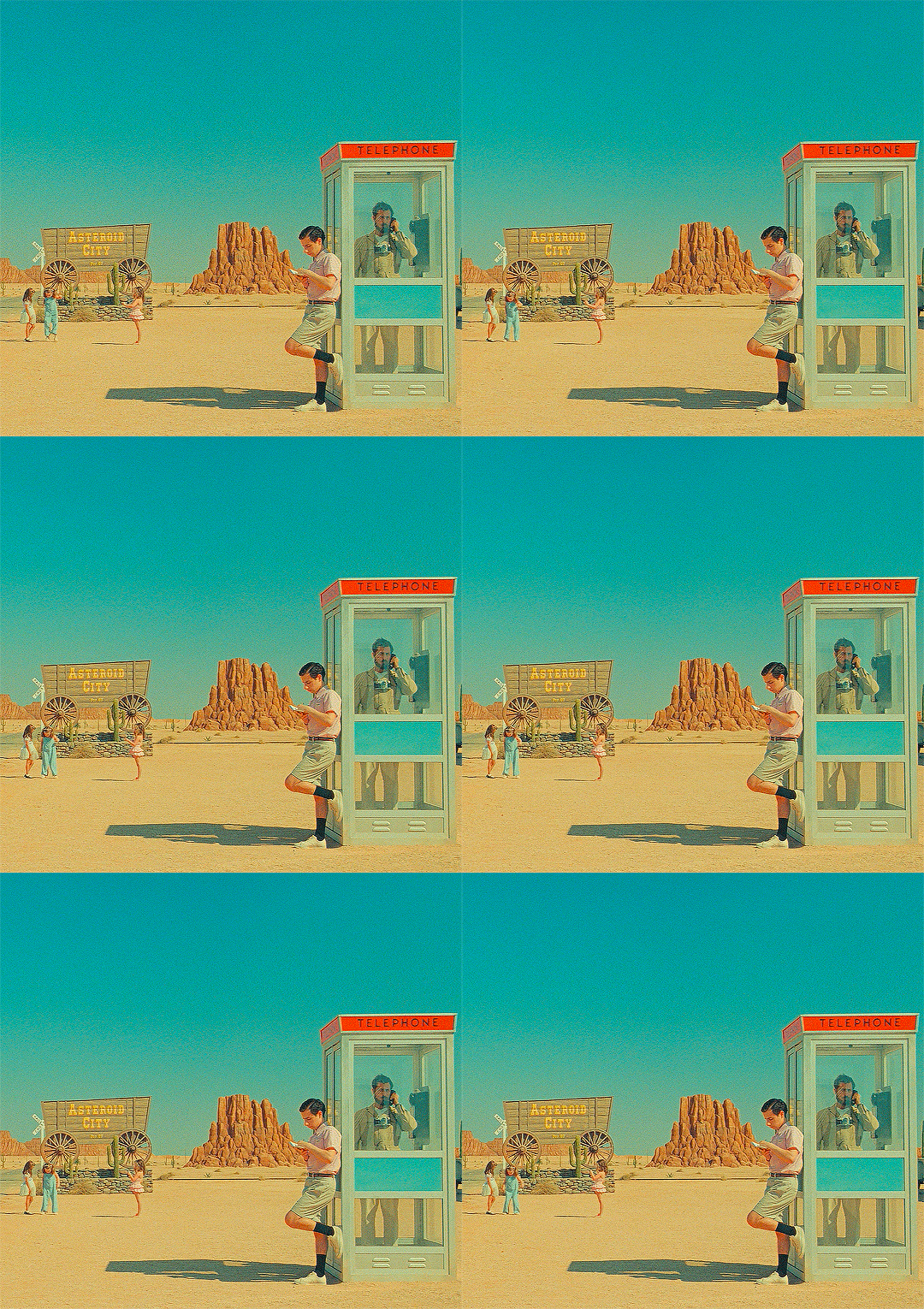
7. Asteroid City
Kind of flew under the radar amidst the post-COVID theater vs. streaming push and pull. I suspect I would have liked this a lot more if I saw it in a theater, which would’ve lent an extra sense of awe to the setpieces and scale of the story. A weird mix of ambitious and restrained, formally interesting with a fully formed visual language while also nowhere near the most audacious risk he’s ever taken. Asteroid City might be #7 overall, but as far as settings go it might be top-3 for me. I’m a sucker for a good blue/teal palette.
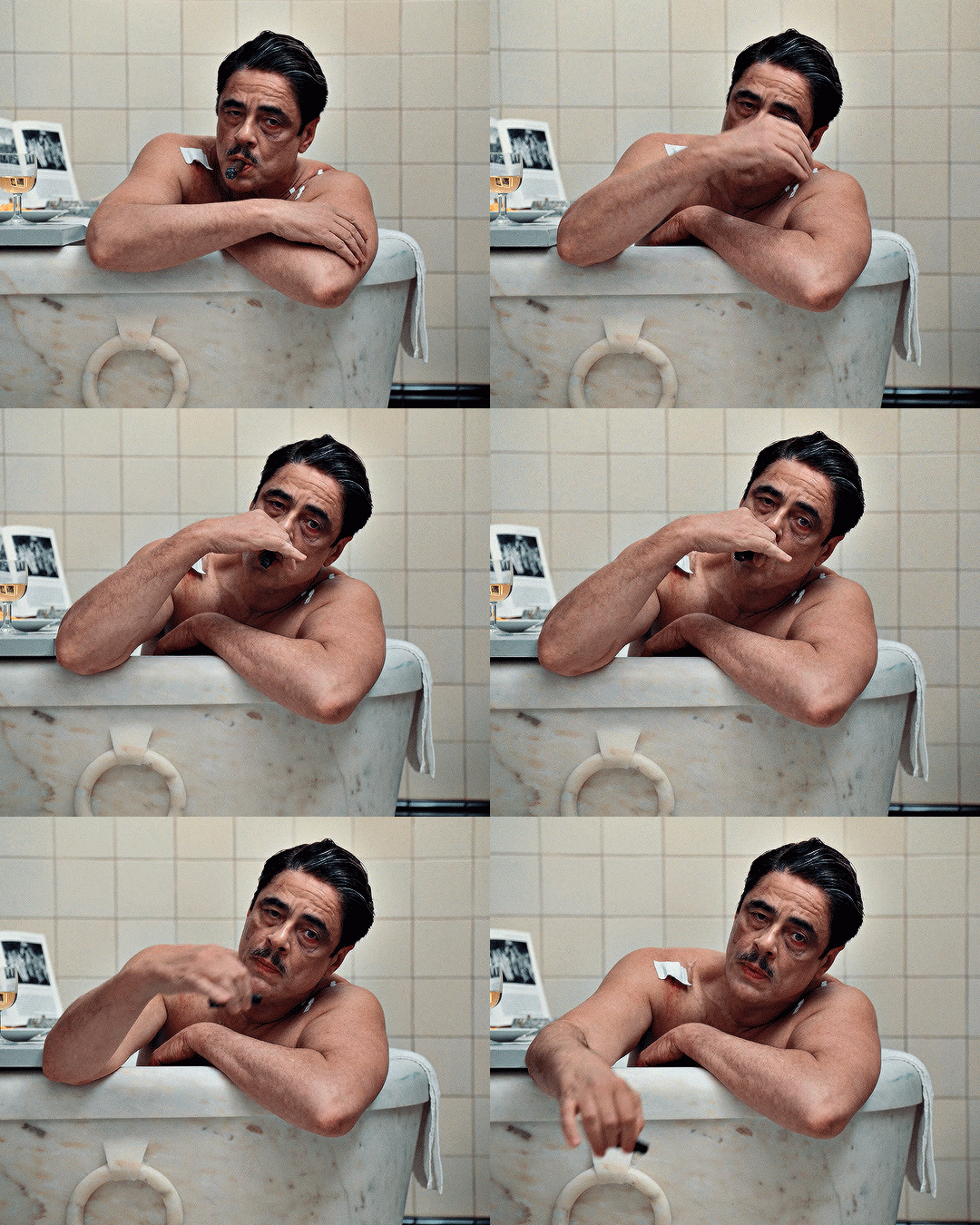
6. The Phoenician Scheme
The jump from Asteroid City to this film is the smallest leap in ambition or style from one of Anderson’s films to the next. That doesn’t mean Phoenician Scheme isn’t a banger. It’s like an arthouse Indiana Jones in many ways, and it’s a rare example of an Anderson work where you can almost benefit a bit from turning your brain off for awhile. But then you’ve gotta turn it right back on because Michael Cera’s in his first ever Wes movie and by god he’s cooking. The funniest and most entertaining movie on this list so far.
5. The Royal Tenenbaums
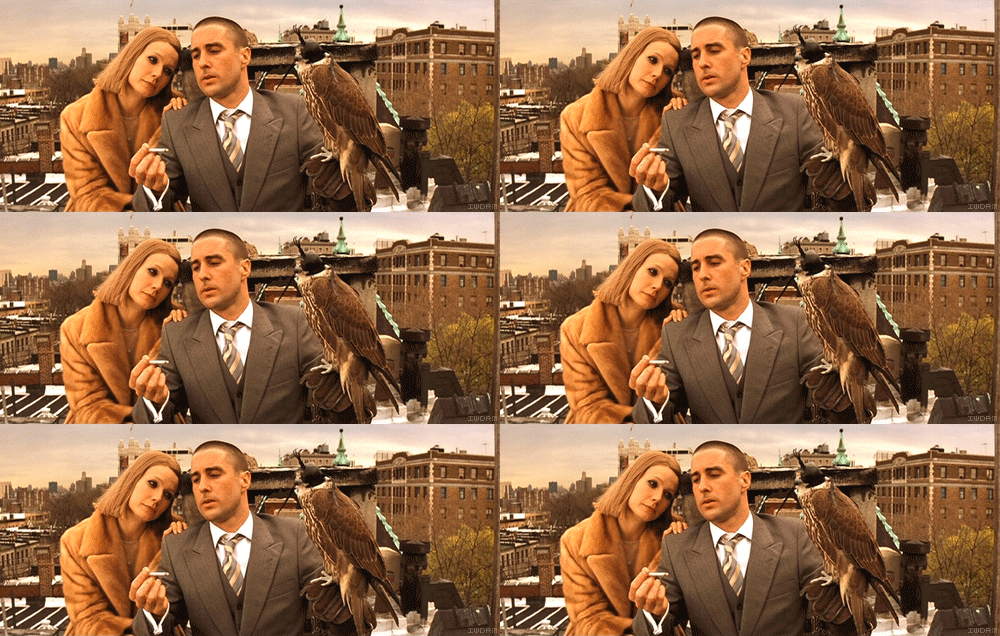
Probably Wes’s darkest, and the formal roughness of his earlier works actually does this piece some favors. Out of any movie on this list, this likely feels the farthest from classic Anderson, while still laying the sturdiest foundation for his storytelling chops and formal flourishes. He only grows from here, and there’s something rare and beautiful about seeing some of the individual moments and choices that got it all started.
Maybe the most memorable acting performances because they sometimes stray from Anderson’s directorial vice grip. For an early work, that’s ok, and I think that’s a part of why there’s so much surface-level darkness in this film. He hides it better moving forward, and some may prefer that. I’m still confused why we didn’t get more Ben Stiller in these movies.
4. The French Dispatch
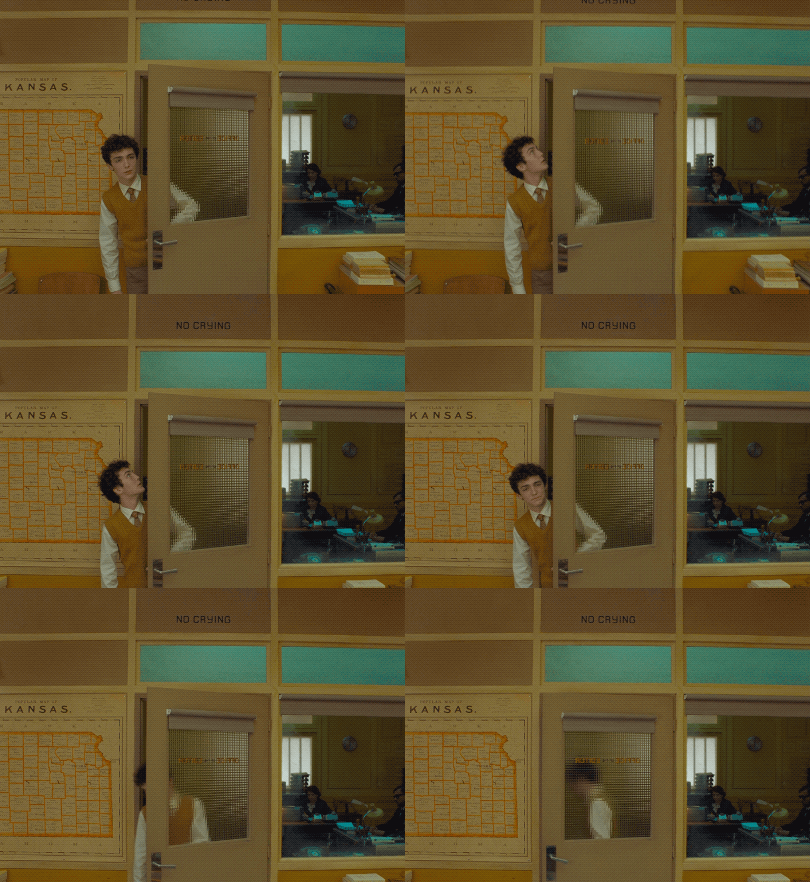
A movie I wanted so badly to crack the top three. Say what you will about an anthology approach, but every story did it for me. There’s a clear hirearchy in my mind (the painting one 1st, the police chef one 2nd, and the revolution one 3rd), but they all stuck with me and hit surprisingly poignant emotional chords with not a lot of runtime to work with.
The real success of this movie is Wes reaching his highest highs yet in both aesthetic and story structure, quite literally bringing a magazine to life in movie form. Some may balk at it being almost too artsy and too high concept, but I’d argue it’s the clearest his vision has ever been and it’s probably the most Wes Anderson on this Wes Anderson list.
3. Isle of Dogs
Just a masterwork from start to finish. Operating at a mind boggling-ly higher level as a stop motion work when held up against Fantastic Mr. Fox, and that’s no indictment of Mr. Fox in the slightest. It’s just so creative, so sure of itself, so heartfelt and engrossing, it’s impossible to imagine any other director could have even come close to making this. Every scene is remarkably consistent in its quality and craftsmanship, and then there will be a sequence every 30 or 40 minutes that leaves your jaw on the floor (shoutout sushi making).
It’s gripping, it’s humorous, and perhaps most importantly, there’s a lot of dogs. And the dogs in this movie are so good, and populate the world at such a high volume, it’s impossible not to walk away from this movie with an undeniable urge to find the nearest dog, whether your own or a strangers, and give them a great big hug. Because they deserve it.

2. Moonrise Kingdom
Seeing the trailer for this movie in my early teens was probably the first time I ever became aware of Wes Anderson’s work. I was on a big movie trailer watching kick at the time, and a few short moments were all it took for this movie to sear itself into my brain. When I finally came around to actually watching the damn thing, needless to say I was tantalized. I came away ready to convert to the church of Anderson the very next day.
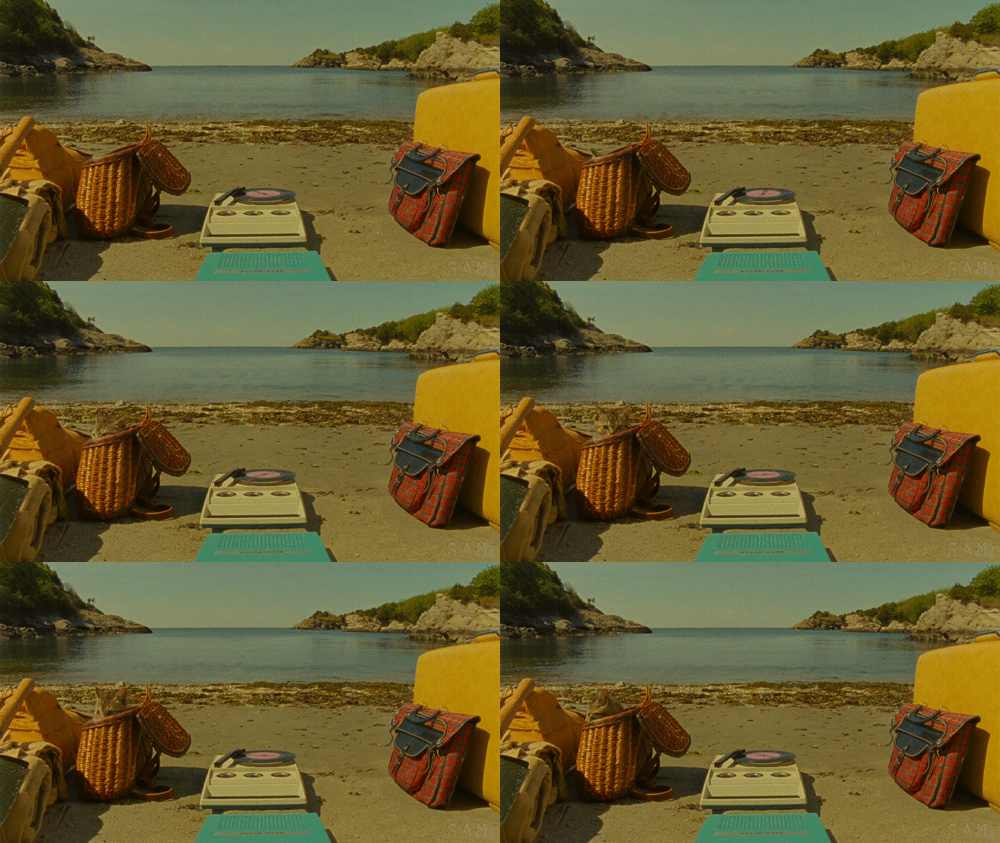
My first experience with the director, and easily the most memorable first watch on this list. I’d argue this film is the perfect first experience to feed any Wes newcomer. It eases you in with a straightforward story, a New England setting that redefines the term “charming”, and this engrossing, addictive comedy/action/heartbreak rhythm that lives scene to scene and never leaves your head. Even now, I can’t stop thinking about the expertly crafted first walkthrough with the scouts, or the idyllic inlet where our heroes make their camp and create a slice of perfect, fleeting paradise.
1. The Grand Budapest Hotel
For my money, The Grand Budapest Hotel is the grandaddy of them all. Yes Wes Anderson’s his most accoladed. Yes it’s his most thematically ambitious, his most visually memorable. No, I don’t care that this was probably a layup pick. This movie was the first instant 5/5 I ever saw, and it’s still teaching me to this day how to connect with a movie on a deeper level. This film taught me see the meaning, and then start all over again with a rewatch and see it again in a wholly new and unexpected light.
I could watch the duo of Zero Mustapha and M. Gustave in every single movie for the rest of time. I’m convinced they’d make everything better. And as an experience of sight and sound, nothing else I’ve ever seen touches this. The candy pink and craggy mountainous set design, the offbeat score pulled straight from an eastern European fairytale, and camerawork that can only be described as peak “Wes Anderson movie” blend in perfect harmony to create one of those experiences I could recall and recite like a song I’ve heard a thousand times. It’s made me laugh, it’s made me cry, it’s made me deeply nostalgic for a hotel and a world I will never physically visit, oftentimes all at once in a single viewing.
I think Wes peaked here. Whether or not he’ll get back to this level, I cannot say. But I can say that I do not care, because whatever journey he takes us on the rest of his career, we’ll always be able to say he took us to the Grand Budapest, not to mention countless other unforgettable places, along the way.
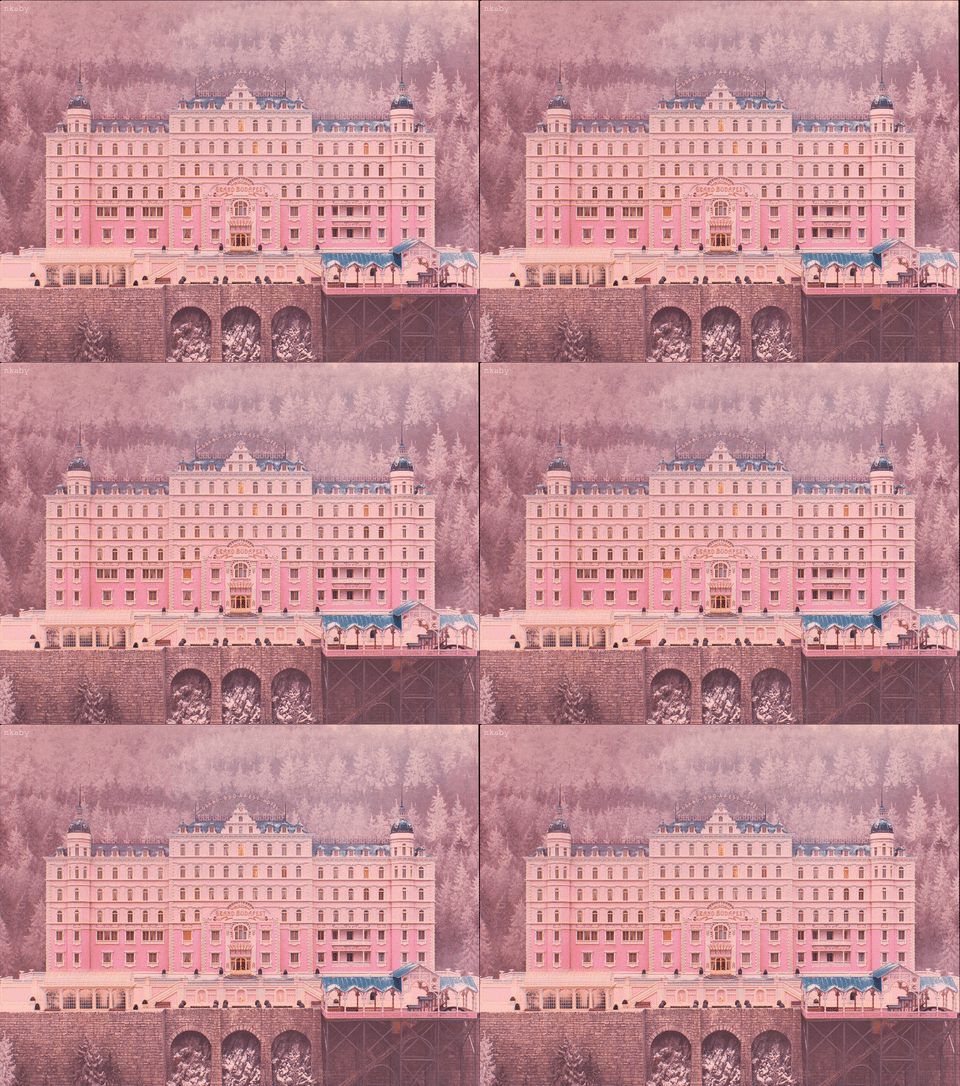
GBH is excellent. Came across an article a while back about how the vibrant, fairy tale, idyllic view of the hotel represents the nostalgia of it through memory rather than the actual current state at the time. Lots of layers to unpack with this one and undoubtedly worth watching more than once.